



The Authenticity Paradox: Why the Brands Winning Right Now Feel Real


Lately, we've been having the same conversation over and over.
A client comes to a meeting, wanting to know how to show up in AI answer engines. They've heard of GEO (generative engine optimization) and want to know what we're doing about it. What are the new tactics? What does the strategy look like? How do we make sure ChatGPT or Claude is recommending them instead of a competitor?
These are completely reasonable things to wonder about. And we understand why they're framed that way, because that's how the marketing industry has always framed it. SEO agencies spent years selling hacks. Get enough backlinks. Hit the right keyword density. Find the loophole before everyone else does. The implicit promise was always that good marketing was really about knowing the trick, not doing the work. (We’ve been guilty of this).
So when AI search shows up and reshapes everything, the natural assumption is that there's a new set of tricks to buy. Surprise! There isn't.
The other side of this conversation is about content. Clients who wonder why they'd pay someone to write social posts or manage their content when AI can do it for free. The question makes sense given what the industry has told them for years, that content is a volume game, that you need to be posting constantly, that showing up is what matters. If that's true, then automation is a no-brainer. Why pay for something a tool can crank out in seconds?
But that framing has always been the problem. Content isn't a box to check. It's how your business talks to people who don't yet know you. When it sounds like it came from a robot, it lands like it means nothing.
What's Actually Happening Out There
There's a strange thing happening in marketing. The tools to produce content have never been cheaper, faster, or more accessible. You can generate a month of social posts in an afternoon. You can fill a blog before your coffee gets cold.
And consumers can feel it.
Not in a "robots are taking over" way. More like the difference between a handwritten note and a template letter with your name dropped into the greeting. The words might be fine. The message might even be accurate. But something is missing, and people sense that something even when they can't name it.
That's the authenticity paradox: the easier it becomes to produce content, the harder it becomes to make content that actually connects.
The brands cutting through right now aren't the ones posting the most. They're the ones saying something worth reading.
What "Real" Actually Means
Real doesn't mean unpolished. It doesn't mean confessional, rambling, or posted from your phone with a typo in the caption.
What it means is that a human being made a judgment call at some point. A person decided what to say, what to leave out, what tone fit the moment, and what their audience actually needed to hear. That decision-making layer is what audiences pick up on, consciously or not.
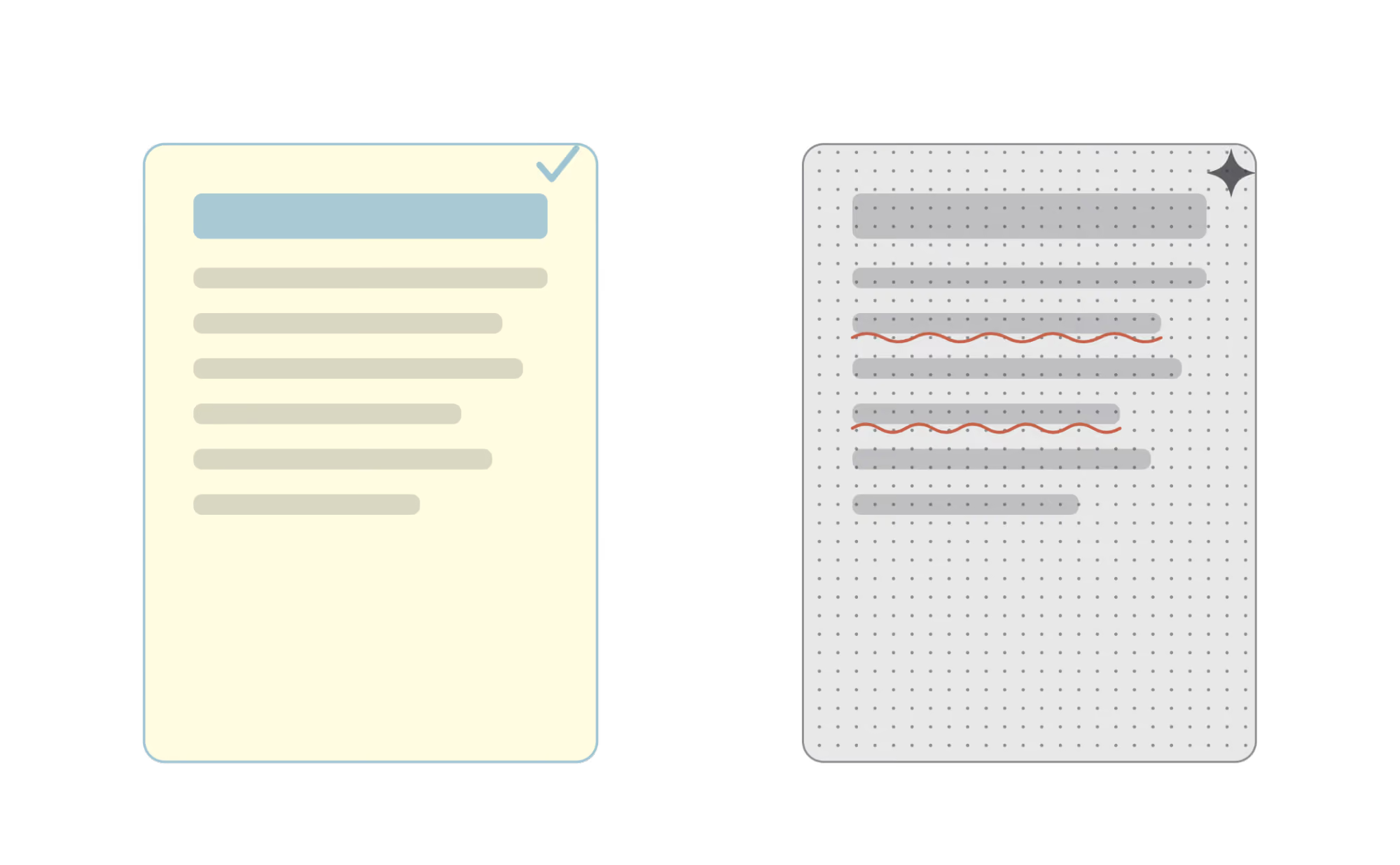
When content is assembled rather than crafted, it reads as assembled. It covers the expected topics. It uses the expected phrases. It answers the question nobody was actually asking.
When we see a client's feed that's been handed off to an automation tool, we can usually spot it within three posts. Everything sounds vaguely correct and completely hollow. There's no friction, no specificity, no sense that a person with opinions made it.
The Shortcut That Costs You
Small business owners are especially vulnerable to the content volume trap, and we get it. You're stretched thin. You need to show up consistently. AI tools offer a way to do both.
The problem is that your size is your advantage, and volume-first content throws it away.
Big brands spend enormous amounts of money trying to feel approachable, local, and human. They hire consultants. They run focus groups. They A/B test "conversational" subject lines. You get that for free because you actually are those things. You know your customers by name. Do you remember what they ordered last time? You have opinions about your industry that come from doing the work, not from a prompt.
That's your edge. A strategy built on automated posts doesn't use any of it.
On Gaming AI Search
When clients ask about AI search, they're really asking a version of the question we've always asked about Google: what does the machine want to see? It's a reasonable thing to wonder.
And the honest answer, in 2026, is the same answer it's always been when the algorithm catches up to the gaming: it wants the thing your audience actually wanted all along. Useful, specific, human content written for real people.
Every major shift in search over the past fifteen years has moved in the same direction. The black-hat tricks stop working. The keyword stuffing stops working. The backlink schemes stop working. What survives, every time, is content that someone actually wanted to read.
AI search is not a new game with new rules. It's the same game, with the shortcuts finally closed off.
What Human-Led Marketing Actually Looks Like
This isn't an argument against AI tools. Use them. They're genuinely useful for research, drafts, repurposing content, and getting unstuck at 4PM on a Tuesday.
The question is who's driving.
Human-led marketing means a person with genuine knowledge and genuine stakes is making the calls that matter: what to say, why it matters to you specifically, what to leave out, and whether it sounds like you. AI can assist with all of those. It can't substitute for them.
When a client asks about automating their social media, we ask them one question back: What do you want people to think about you after they see it? If the answer is real, specific to their business and customers, then it has to come from them. An automation tool doesn't know it.
The Ending We Keep Coming Back To
Marketing has always had people who treat it like a system to beat. Buy the right keywords. Post at the right time. Hit the right word count. And those things matter, tactically.
But the businesses we’ve watched build something durable aren't the ones that found the best shortcuts. They're the ones who decided to actually talk to their customers online the same way they do in person, and trusted that being real was a strategy worth betting on.
It still is. Probably more so now than before.
Your customers followed you because of what you stand for and what it feels like to do business with you. That's worth protecting. No tool is going to do it for you.
So what does that mean practically? If you have someone in-house who understands your brand, knows your customers, and can lead that vision, trust them with it. Give them the tools and get out of the way. But if you don't have that person, or your marketing team needs a little help in certain areas, consider working with someone who can fill that role. Not someone that hands you a content calendar and disappears, but a partner who takes the time to understand what you're actually about and helps you show up in a way that reflects it.
You don't have to outsource everything. You just need someone with a human point of view steering the ship. The tools, the platforms, the tactics, those are all secondary to having a real perspective behind them.
Your customers followed you because of what you stand for and what it feels like to do business with you. That's worth protecting, and worth getting the right help to protect it.