



The "Messy Middle" of Buying Decisions: What Actually Happens Between Awareness and Purchase
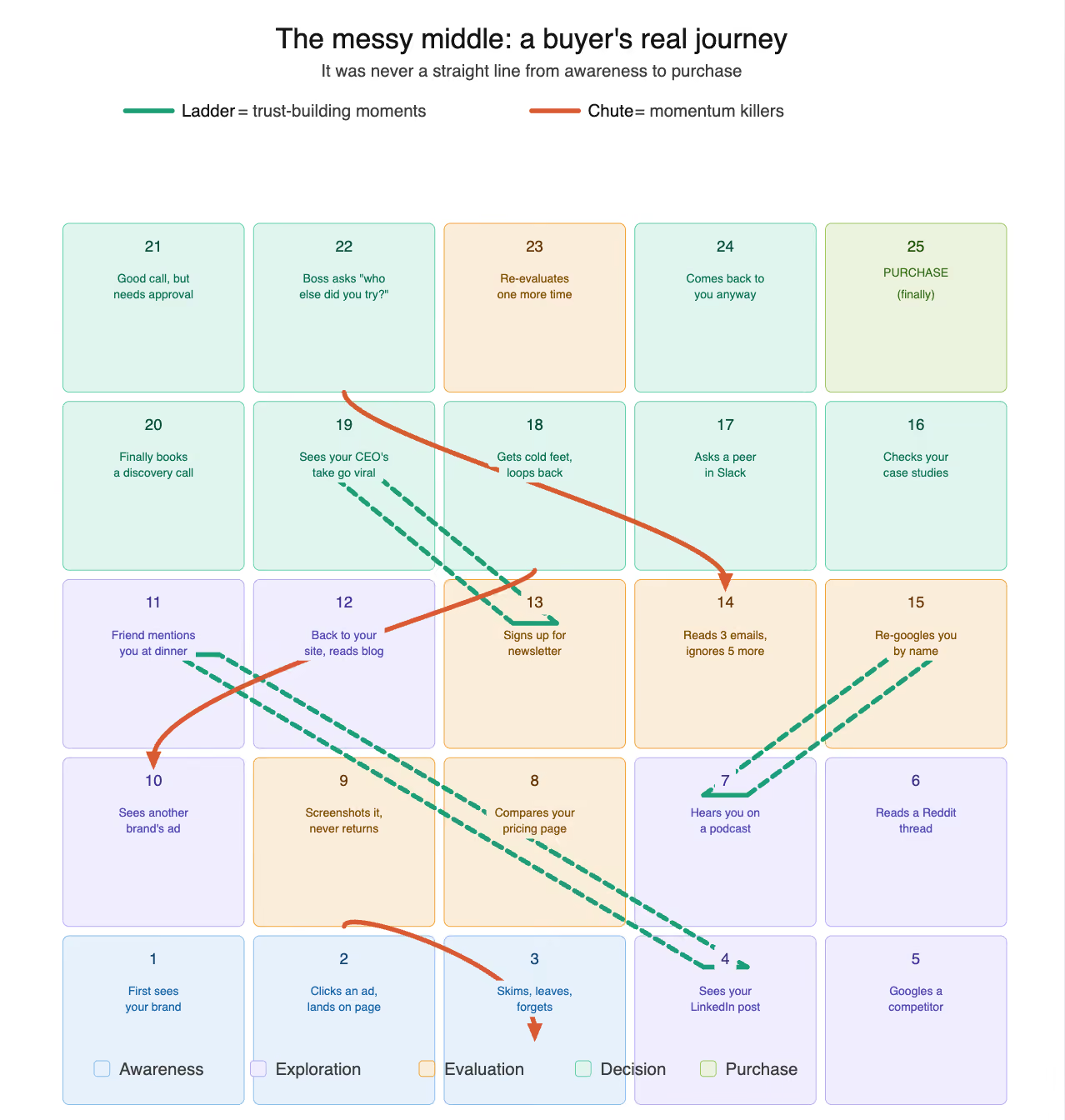
The funnel is lying to you.
Every marketing textbook tells the same story: awareness leads to consideration, consideration leads to decision, decision leads to purchase. It's clean. It's linear. And it's almost never how people actually buy.
In reality, the space between "I've heard of you" and "take my money" is chaotic. People loop back. They forget about you. They remember you in the shower three weeks later. They ask a friend. They see your competitor's ad. They take a screenshot of your pricing page and never come back to it. They Google you, read a Reddit thread, and then buy from someone else entirely.
This is the messy middle, and if you don't understand it, you're spending money in the wrong places and taking credit for the wrong things.
What the messy middle actually looks like
Google's research team coined the term "messy middle" to describe the looping cycle between two mental modes that buyers toggle between:
Exploration — expanding their options, gathering information, and discovering new brands.
Evaluation — narrowing down, comparing, and applying their own criteria to what they've found.
People don't move through these stages once. They loop. Sometimes for minutes, sometimes for months. A business owner looking for a new CRM might spend weeks exploring, narrow it down to two options, then stumble on a podcast episode that sends them back into exploration mode entirely.
The messy middle is where most of your potential customers live right now. They know you exist. They haven't bought yet. And the reason isn't that they need another email from your drip sequence.
The rise of zero-click marketing (and why it matters here)
Here's where things get uncomfortable for marketers who live and die by click-through rates.
An enormous amount of influence happens in places where nobody clicks anything. Amanda Natividad at SparkToro popularized the term "zero-click marketing", the idea that much of your most valuable marketing creates impact without generating a measurable click.
Think about it:
- Someone sees your LinkedIn post, doesn't like it, doesn't comment, but remembers your take on pricing strategy when they're evaluating vendors two months later.
- A podcast listener hears your founder's interview while commuting. They never visit the show notes link. Six months later, when they need what you sell, your name is the first to come to mind.
- A business owner reads your newsletter insight, mentions it in a conversation with a peer, and that peer becomes your customer. You'll never see that in your analytics.
This is the messy middle in action. The buying decision is being shaped in moments you can't track, on platforms that don't send referral data, through conversations that happen offline.
Zero-click marketing isn't a strategy you opt into. It's a reality you either acknowledge or ignore. The brands that win in the messy middle are the ones that create value in these invisible moments, not just optimize for the measurable ones.
The attribution trap
And this brings us to the elephant in every marketing meeting: attribution.
Most attribution models assume the customer journey is trackable. If someone bought, you should be able to trace back to the touchpoint that "caused" the sale. First-touch attribution gives credit to the first interaction. Last-touch gives it to the final one. Multi-touch tries to spread the credit around.
They're all wrong. Or more precisely, they're all incomplete.
Here's what attribution can't capture:
- The dark social effect. When someone shares your content in a private Slack channel, a group text, or a DM, your analytics sees "direct traffic." It has no idea that a trusted recommendation just did more selling than your entire ad budget.
- The slow burn. A prospect might consume 20 pieces of your content over six months before ever visiting your website. Attribution sees the Google search that brought them in. It doesn't see the six months of trust-building that made them search your name in the first place.
- The borrowed trust. When an industry voice mentions you on their podcast or in their newsletter, their audience arrives pre-sold. Your attribution model credits the channel. The real credit belongs to someone else's reputation.
This doesn't mean you should throw out your analytics. It means you should stop letting attribution data make your strategic decisions in isolation.
The landing page trap: why small-budget Google campaigns usually fail
This is where the messy middle has very practical consequences for how you spend money.
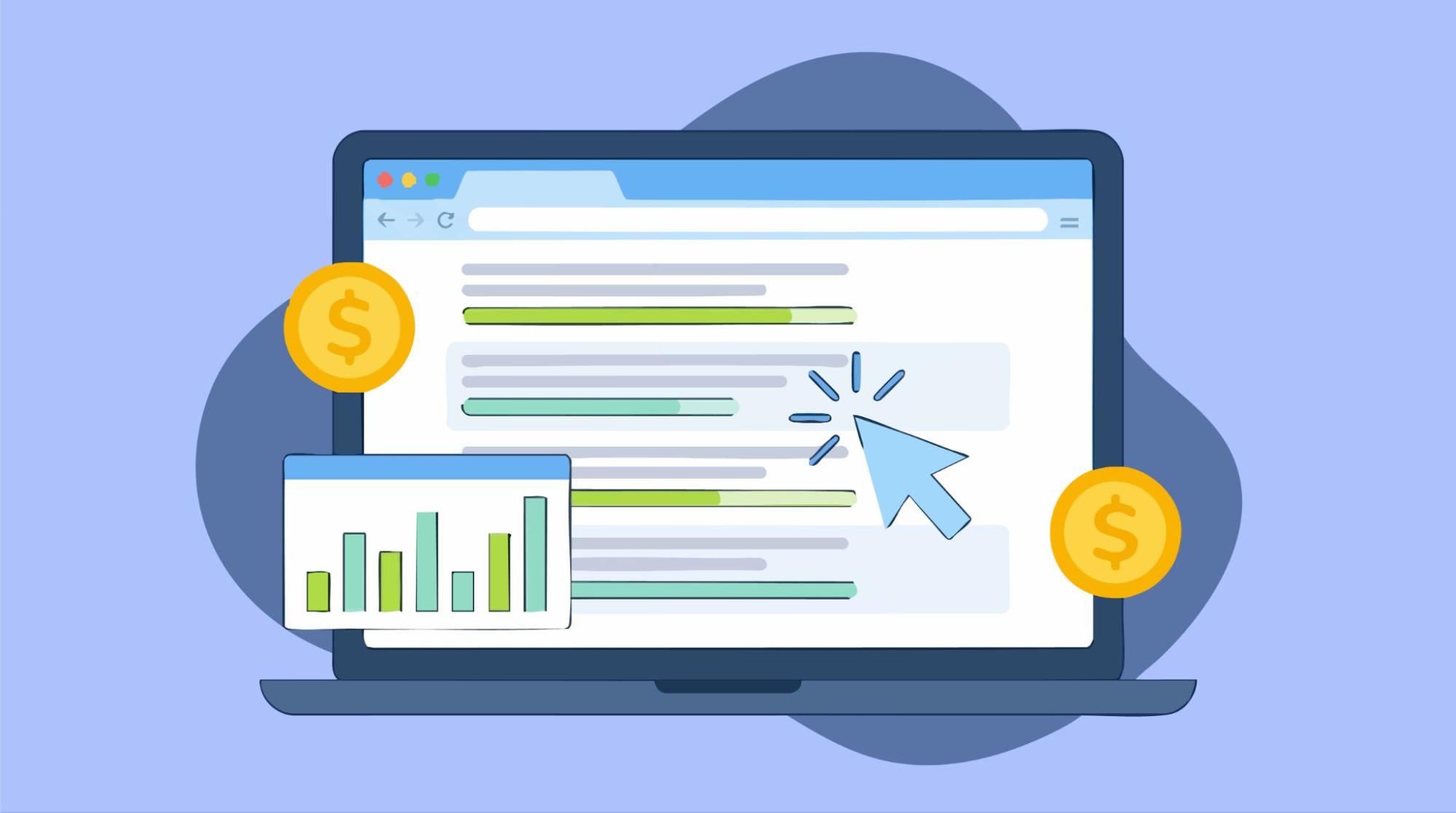
Here's a scenario that plays out constantly: a small business sets up a Google Search campaign with a modest budget, points it at a landing page, and waits for conversions. On paper, the logic is sound: someone searches for what you sell, clicks your ad, and lands on a page built to convert. Clean and simple.
Except it almost never works the way it's supposed to.
The problem isn't the landing page itself. The problem is the assumption baked into the entire setup: that a stranger who has never heard of you will search, click, read, and buy all in one sitting. You're betting your budget on a single touchpoint doing the work that usually takes dozens.
Think about your own buying behavior. When was the last time you clicked on an ad from a brand you'd never heard of and purchased immediately? If you're like most people, you didn't. You may have skimmed the page. You might have opened a few competitor tabs. You probably left and forgot about it entirely.
And that's the real cost of this approach - not just the wasted click, but the missed opportunity. That visitor lands on your page, doesn't convert, and has no easy way to stay connected with your brand. There's no content ecosystem to explore. No newsletter to subscribe to. No reason to remember your name. They go back to the search results, click on a brand they do recognize, and you've just paid to warm up a lead for someone else.
Small-budget search campaigns are especially vulnerable here because you can't buy enough volume to overcome the math. If only 2-3% of landing page visitors convert on a first visit - and that's generous for an unknown brand - you need enormous traffic to generate meaningful results. With a small budget, you're getting a trickle of strangers, converting almost none of them, and learning very little in the process.
The deeper issue is that this approach treats marketing as a single transaction instead of a relationship. It skips the messy middle entirely and expects people to jump from "I've never heard of you" to "here's my credit card" based on one page of copy and a hero image.
The same problem shows up with paid social media, and in some ways, it's even worse.
At least with Google Search, someone has expressed intent. They typed a query. They're actively looking for something. With paid social, you're interrupting someone who was scrolling through vacation photos or industry memes. The bar for earning attention is already higher.
Now imagine you're a brand with no organic social presence. No posts. No followers. No content history. You run a paid campaign, someone sees your ad, and they may be curious enough to tap on your profile. What do they find? A ghost town. No recent posts, no personality, no proof that this is a real company with real ideas and real customers.
That profile visit is a trust check, and you just failed it.
Even if they don't visit your profile, the absence of organic content means there's no ecosystem for them to fall into after the ad. They see your ad once, they scroll past, and that's it. You've paid for a single impression with no compounding effect. Compare that to a brand that posts regularly, someone who sees their ad and keeps seeing their organic content in the feed over the following weeks. That repetition is what moves people through the messy middle. Without it, paid social becomes a series of expensive first impressions that never lead to a second one.
There's also a credibility issue that's easy to overlook. When a company only shows up in people's feeds as an ad, it signals something. Rightly or wrongly, people register the difference between a brand that's part of the conversation and one that's just buying its way into the room. Organic content builds the context that makes paid content feel like a natural extension rather than a cold interruption.
This doesn't mean Google Search or paid social are useless or that landing pages have no place in your strategy. It means they work best when they're capturing demand you've already built. When someone searches your brand name because they've been following your content for months, or when they search a problem and recognize your name in the results because they heard you on a podcast last week.
Search captures intent. But if you haven't built any awareness or trust beforehand, there's no intent to capture, just cold clicks from strangers who have no reason to choose you over the next result.
So what do you actually do in the messy middle?
If the journey is nonlinear and half of it is invisible, how do you market effectively? A few principles:
1. Be present without being pushy
The messy middle rewards consistency over intensity. Instead of trying to engineer the perfect conversion moment, focus on being reliably present in the spaces where your audience explores and evaluates.
This means showing up with useful thinking on LinkedIn, in newsletters, on podcasts, in communities, not with CTAs and sales pitches, but with a genuine perspective that makes people think, "These people really understand my problem."
2. Invest in what you can't measure
This is hard advice to follow, especially if you report to someone who wants to see ROI on every dollar. But some of your highest-impact marketing activities will never appear on a dashboard.
Sponsoring a niche industry event. Publishing a weekly insight that builds slow trust. Being a guest on podcasts that your ideal customers listen to. These things compound over time in ways that attribution will never fully capture.
3. Ask better questions than "Where did you hear about us?"
If your post-purchase survey has a dropdown menu with options like "Google" and "Social Media," you're getting garbage data. Instead, add an open-ended field: "How did you first hear about us? Tell us the story."
You'll be amazed at what people say. "My business partner mentioned you at dinner." "I've been following your CEO on LinkedIn for a year." "Someone in a Slack group I'm in recommended you." These answers are more strategically valuable than anything your attribution software will tell you.
4. Build for the loop, not the line
Stop designing campaigns as if people move in a straight line. Instead, create content and experiences that serve people, regardless of where they are in their decision-making process.
Someone in exploration mode needs perspective and education. Someone in evaluation mode needs proof and specificity. Someone who just looped back to exploration needs reassurance that rethinking their decision is normal.
Your content ecosystem should serve all of these moments, not just the bottom-of-funnel "buy now" ones.
5. Make your brand easy to recall, not just easy to find
SEO and paid search help you get found when someone is actively looking. But in the messy middle, the bigger advantage belongs to brands that get remembered, the ones that come to mind before someone ever opens a search bar.
This is the real power of zero-click marketing. Every piece of content that resonates, every insight that gets shared in a private conversation, every podcast appearance that makes someone think differently, it's all building mental availability. And mental availability is what determines whether your name surfaces when a buyer is finally ready to act.
The uncomfortable truth
The messy middle means accepting that you have less control than you think. You can't engineer every touchpoint. You can't track every influence. You can't attribute every sale to a single campaign.
But you can do something more powerful: you can build a brand that people trust, remember, and recommend in the moments you'll never see. That's not a consolation prize. In a world where everyone is optimizing for the same measurable clicks, it might be the biggest competitive advantage you have.
The buying decision was never a funnel. It's a web of moments, conversations, and impressions, most of which you'll never see in a dashboard. The marketers who accept that aren't flying blind. They're just honest about what the instrument panel can and can't show them.
Where are your gaps?
Most businesses have more opportunities to connect with potential buyers than they realize; they're just not seeing them. It could be the podcast your audience already listens to. The community where your name should be coming up, but isn't. The moment after someone visits your site, there's nothing pulling them back.
At TargetMarket, that's what we help you find. We look at the full picture of how your buyers actually move through their decisions, not just the parts your analytics can see, and identify the moments where you're either absent, invisible, or saying the wrong thing.
If you feel your marketing should be working better than it is, let's have a conversation about where those missing connections might be.